Damp and Condensation: what to check before buying a home
A damp patch can turn an otherwise promising viewing into a worry. What should you ask, and how do you find out whether there is a bigger problem?
For buyers viewing homes in Peterborough, Cambridgeshire and the surrounding areas this winter, the useful starting point is to record what you notice and ask for an explanation. A seller’s reassurance may help, but you will also want enough information to understand any investigation or repairs before committing to the purchase.
Is condensation different from damp?
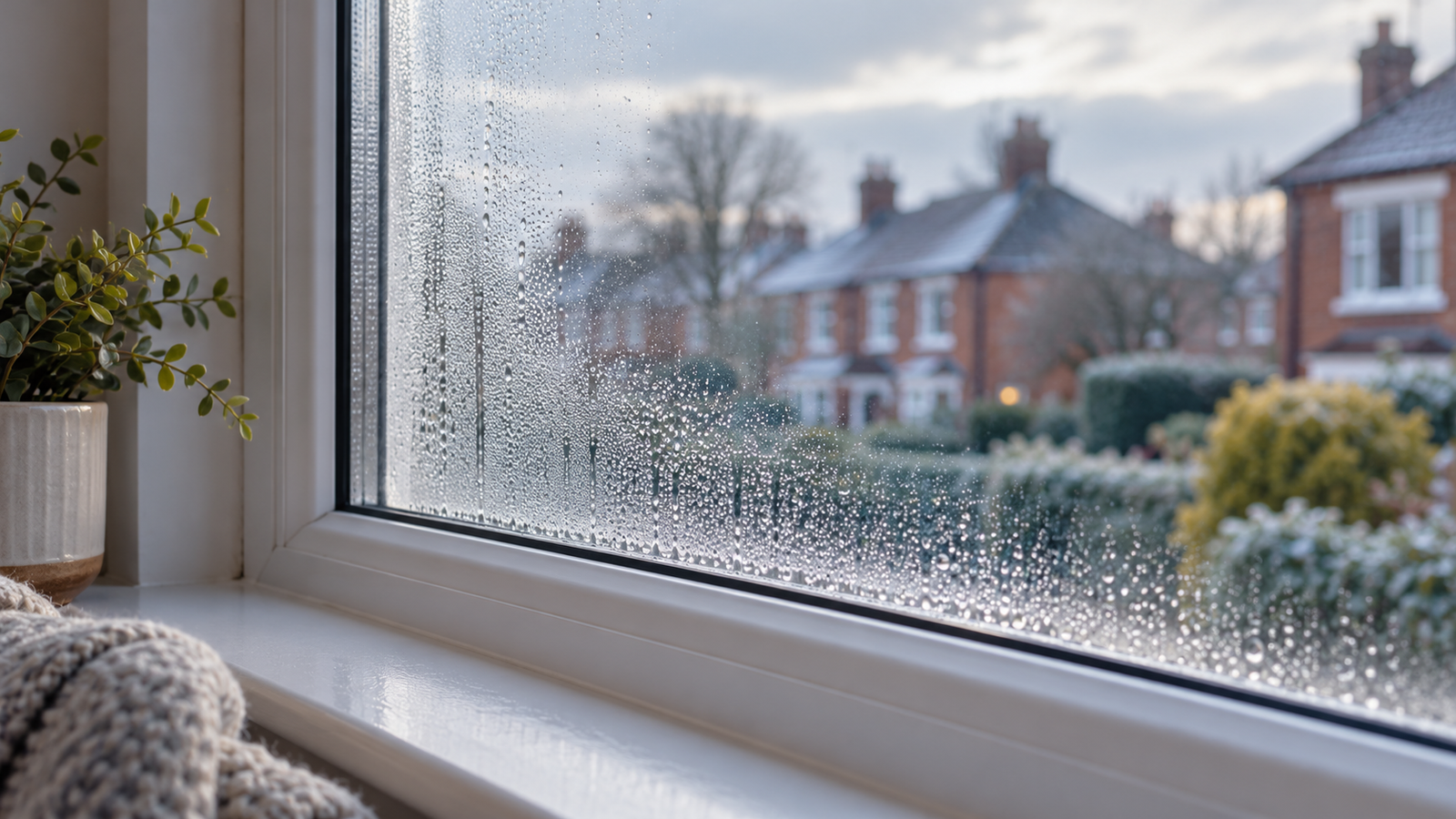
“Damp” describes excess moisture in a building. Condensation is one way that moisture can collect: water vapour turns to droplets when it meets a sufficiently cold surface. It can affect windows, walls and other cold areas. A little window condensation that clears quickly is different from persistent moisture, deteriorating finishes or recurring mould.
The Energy Saving Trust’s damp guide explains that both older and newer homes can be affected. During a viewing, look for staining, peeling decoration, mould and musty smells, as well as wet glass. These are reasons to ask questions; the appearance alone does not establish the cause.
What else could be allowing moisture in?
Rainwater and plumbing leaks also need consideration. Defective roof coverings, overflowing gutters, damaged rainwater pipes and leaking bathroom fittings are possible sources. A patch that returns after rainfall is useful information to pass to your surveyor.
RICS advises finding the source of moisture before choosing a remedy. Its consumer guide to damp and mould also cautions against relying on a damp meter alone to diagnose the source, particularly in hard walls and solid floors. Likewise, low-level staining should not automatically be labelled “rising damp”.
Our earlier article on rainwater fittings and maintenance is a useful companion when looking at the outside of a property.
Questions to ask at the viewing
- When was the problem first noticed? Ask which rooms are affected and whether it changes with the weather or season.
- Has anyone investigated it? Request the written findings, together with details of any recommended work.
- What repairs have been completed? Ask for dates, invoices and any relevant guarantees, then share these with your surveyor.
- Has it returned? Establish whether staining or mould has reappeared since the repairs or redecoration.
- Can you arrange a further visit? If the explanation is unclear, ask whether access can be provided for the investigation your surveyor recommends.
Take photographs with permission and note the room and position of each concern. Send your questions before the survey so they can be considered alongside the inspection.
Ventilation is part of the picture
Cooking, bathing and drying clothes indoors introduce moisture into the air. Ventilation helps remove it. Ask how the home is ventilated, whether extractors discharge outdoors, and whether windows or other ventilation systems have recently been changed.
The Energy Saving Trust’s ventilation guidance explains that insulation, new windows and draught proofing can make a home more airtight, so ventilation needs consideration alongside those improvements. A home with a continuous mechanical ventilation system should be operated in accordance with its instructions.
Condensation can involve the building’s temperature, insulation, ventilation and moisture sources. Avoid accepting a blanket explanation that the occupiers simply need to open the windows more often.
What can a home survey tell you?
A home survey provides a professional assessment within the scope of the service agreed. Your surveyor can consider visible moisture concerns alongside the property’s wider condition and explain where further investigation is needed. A visual, non-invasive inspection has limits, particularly where areas are concealed or inaccessible.
Historic England’s guidance on assessing damp in historic buildings highlights the importance of understanding what different assessment methods can tell us and their limitations. If you are buying a traditional or historic property, ask about the surveyor’s experience with that construction.
When a report recommends further investigation, establish what needs checking, by whom, and when. Obtain the information and quotations needed to assess the implications before making your decision.
Your Property, Our Priority.