Aerial Inspections
The roof is one of the parts of a home that can be hardest to assess at a viewing. A rear roof slope, the top of a chimney or a gutter behind a parapet may be largely hidden from the ground. A better viewing position can make a useful difference to the information available.
For buyers and homeowners in Peterborough, Cambridgeshire and the surrounding area, drone and camera pole inspections can help a surveyor examine visible high-level features. Their value depends on the views obtained, the property and the professional assessment that follows.
What does an aerial view add?
A drone-mounted camera can collect photographs or video from positions that would be difficult to obtain from ground level. This can help the surveyor look more closely at roof coverings, chimney details and rainwater fittings where the flight and sightlines are suitable.
In a RICS Built Environment Journal article, building surveyor Adrian Tagg explains why imagery needs to be considered alongside the wider inspection. Photographs can reveal useful clues, while understanding their significance still requires judgement and context.
Which features might the images help assess?
- Roof coverings: visible slipped, missing or damaged tiles or slates, and the apparent condition of ridge and hip details.
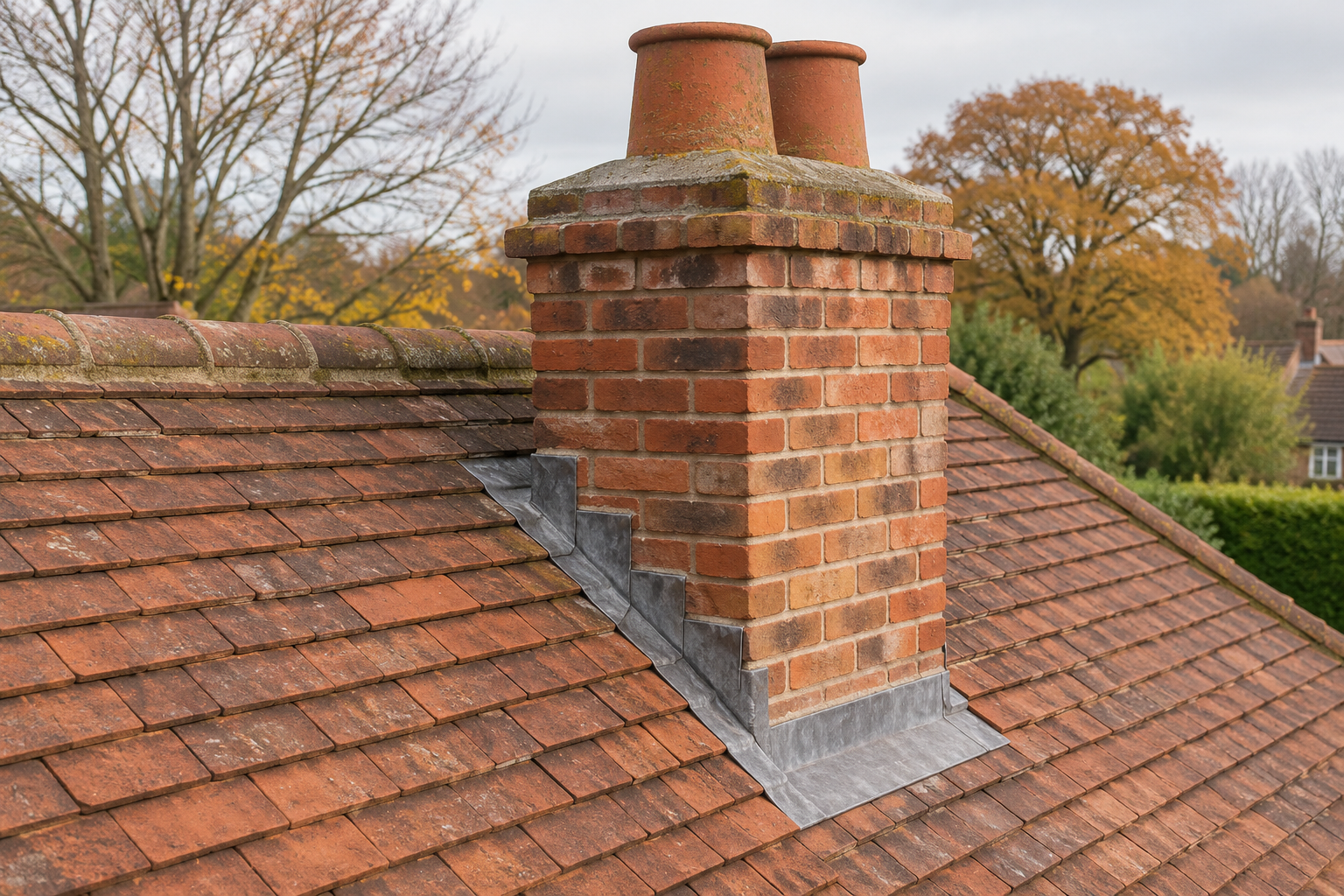
- Chimneys: visible masonry, pointing, pots and the junction with the roof.
- Flashings: visible displacement or deterioration at junctions, where the angle and image detail allow an assessment.
- Rainwater fittings: visible debris, vegetation or damage that may warrant closer attention.
Historic England’s maintenance checklist highlights these roof, chimney and rainwater features. The list describes things worth checking; a photograph will not necessarily show every part of them.
What remains concealed?
An external image cannot show everything beneath the tiles, inside a chimney or within a roof structure. It does not, by itself, establish that a roof is watertight or explain the cause of every visible problem.
For example, an image may show displaced tiles, while an accessible internal roof inspection provides further evidence about their condition and possible causes. The RICS journal article illustrates this distinction. The report should explain the significance of the available evidence, areas that remain unseen and whether further investigation is needed.
Can a drone always be used?
Its use depends on the location, suitable access, safe operating conditions and applicable flight restrictions. Nearby buildings, trees or other obstructions can affect the views available.
The Civil Aviation Authority’s flight-safety guidance explains how wind, rain, fog, glare and cold can affect safe operation. Conditions around a roof may differ from those at ground level.
The operator must assess how the flight can be conducted safely. The CAA’s Open Category guidance, for example, addresses direct sight of the aircraft and awareness of surrounding airspace. A useful inspection cannot be promised simply because a drone is available.
Where does a camera pole fit in?
A camera mounted on an extendable pole offers another way of viewing some high-level areas from a suitable position on the ground. Depending on the building and access, it may help obtain a view of a roof edge, gutter or other feature.
It has limits too: the available height, working space and viewing angle all matter. The surveyor should select a suitable method for the particular area and explain any remaining restriction. Some concerns may still require closer access or a specialist investigation.
A camera pole is in our experience, safer to use and better in conditions such as wind and rain. Drones are light and cannot be flown in winds and rainy conditions, thus limits the use.
How Eastern Surveyors uses this equipment
Our drone and camera pole service includes use alongside Level 2 and Level 3 Home Surveys where there is a need and it is reasonably safe, subject to our terms of engagement. We also offer a standalone service for specific inspection requirements.
Tell us which areas concern you when requesting a quotation. A photograph of the property or a listing link can help start that discussion. We can explain the proposed scope and what happens if suitable views cannot be obtained.
Three questions to ask before booking
- Which areas are you trying to assess? Identify the roof slope, chimney or rainwater fitting that prompted your concern.
- What happens if flight or another viewing method is unsuitable? Ask how limitations, alternatives or any further visit would be addressed under the agreed service.
- How will the findings be explained? Ask how the images will inform the report and what any recommendations for further inspection mean for your purchase or maintenance plans.
Our earlier article on rainwater fittings and maintenance is a useful companion when considering gutters and downpipes.
Discuss the property with Eastern Surveyors
Send us the property details and the areas you would like assessed. We can discuss an appropriate inspection and explain your quotation.
Request your quotation or call 0800 158 3769.
Your Property, Our Priority.